John Stroup (1946-2025): Academic Secret Agent
November 5, 2025
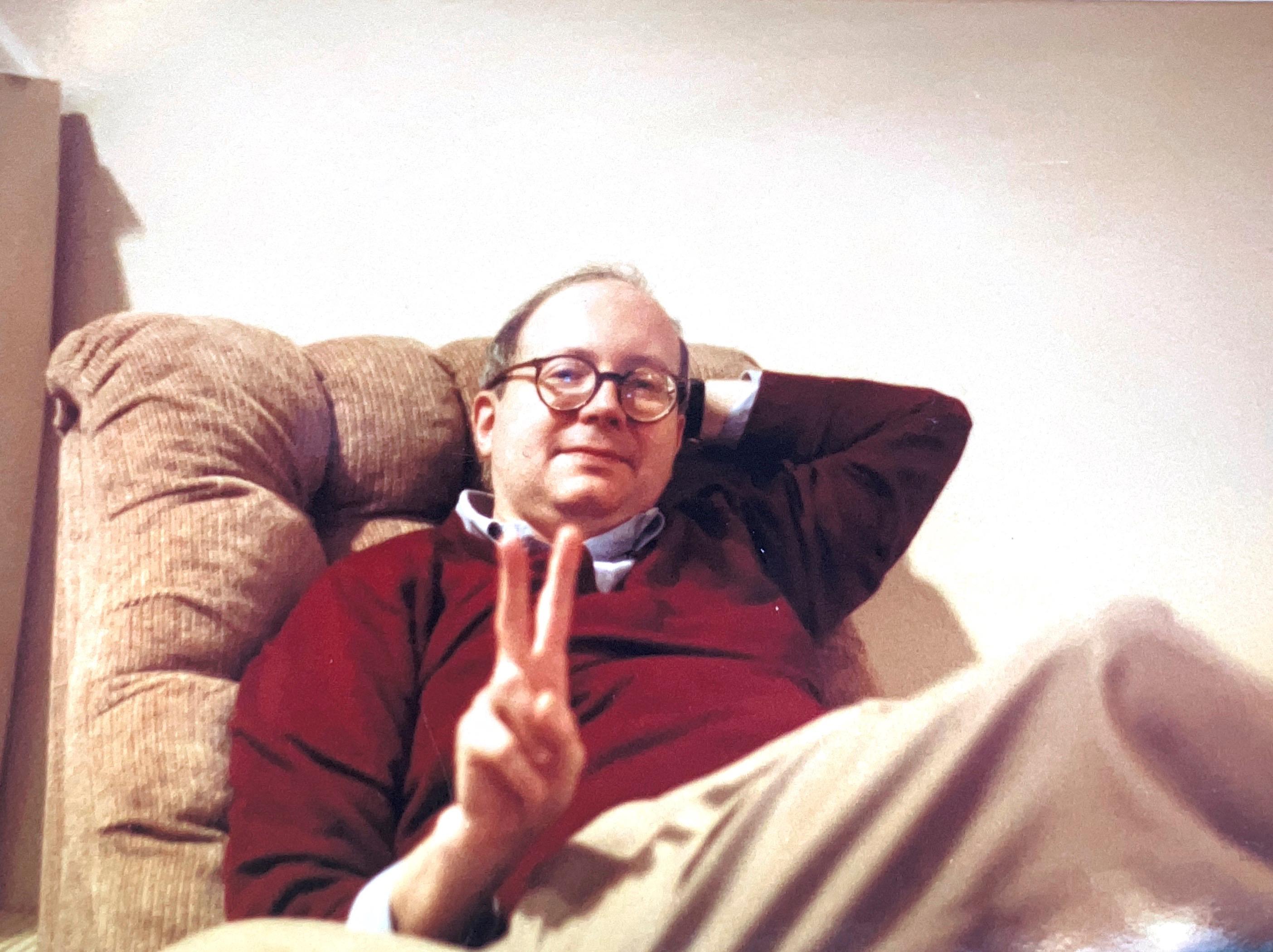
John Michael Stroup was born on August 10, 1946, in Missouri, and passed away at 8am on January 17th, 2025, in Houston, Texas. He was buried alongside his parents, John Hollis Stroup and Ferne Elaine Stroup, at the Christian Church Cemetery in Fredericktown, Missouri, on March 13, 2025.
It’s hard to talk about someone who is a true individual. Someone who really can’t be compared to anyone else. I don’t think I know anyone like that, except for John Stroup. He was truly an oddball, in the best sense. Talking with him was always likely to surprise you, since he had a personality composed of multitudinous contradictions. A believer in dogmatism, he himself was not a dogmatist. An admirer of the Leyendecker archetype of the handsome football chad, he himself was sickly and cerebral.
A spiritual portrait of John Stroup by J. C. Leyendecker 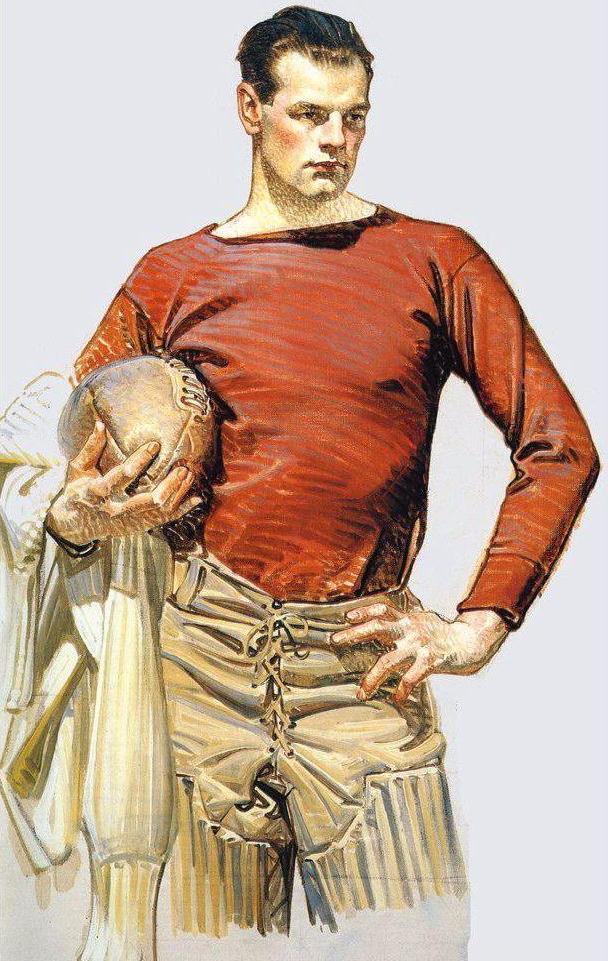
He would have hated being called a liberal. And out of respect for the deceased, I won’t expose the extent of his liberality. I’ll just say that his liberality was of an extreme variety. He was not milquetoast on anything. His extreme views, however, were all over the map. To calculate that the average of Stroup’s various opinions put him in the center would be to miss him completely. His ideological topography was like a ball of spikes, and traversing it was not for the faint of heart. We disagreed on many things but never fought over our intellectual disagreements. He would politely disagree and then at 2 a.m. destroy my inbox with many gigabytes of PDF files he had harvested over the years.
I first met Stroup when I visited Rice in 2018. He had his door open, and his office was piled with books, boxes, and a few inches of dust. He was sitting buried among his books drinking a Nesquick chocolate milk, in order to keep his blood sugar up, and diabetic shock at bay. He was wearing his trademark flat cap, suspenders, and a jacket that I had only previously seen on Captain Von Trapp. Which, I would later learn, is called an Austrian hiking jacket. He had on these big coke bottle glasses that made his eyes look like enormous orbs in the darkness. I was very intimidated. We discussed his work on church history, but I left shortly after, since he seemed a little grumpy.
It wasn’t until my first semester, when I sat in on his class “Losing Your Religion in Film” that I realized that Stroup was a deeply Straussian figure, encoding large amounts of subtext in his lectures. During the class, he had pulled up (what he called) his “script” onto the projector, and was reading it verbatim. Most of the students were zoned out by his extremely convoluted prose. And perhaps the fact that the seminar room was kept the temperature of a refrigerator. Stroup required a strong AC in order to leave the house. Needless to say, Houston was not well suited to his temperament. However, I quickly realized that he was not-so-subtly putting forward a thesis about the collapse of Western civilization, similar to Oswald Spengler’s. My suspicions were confirmed when I pulled up his faculty bio online. I remember sitting in class laughing my head off at his not-so-subtle declaration of his alternative academic interests.
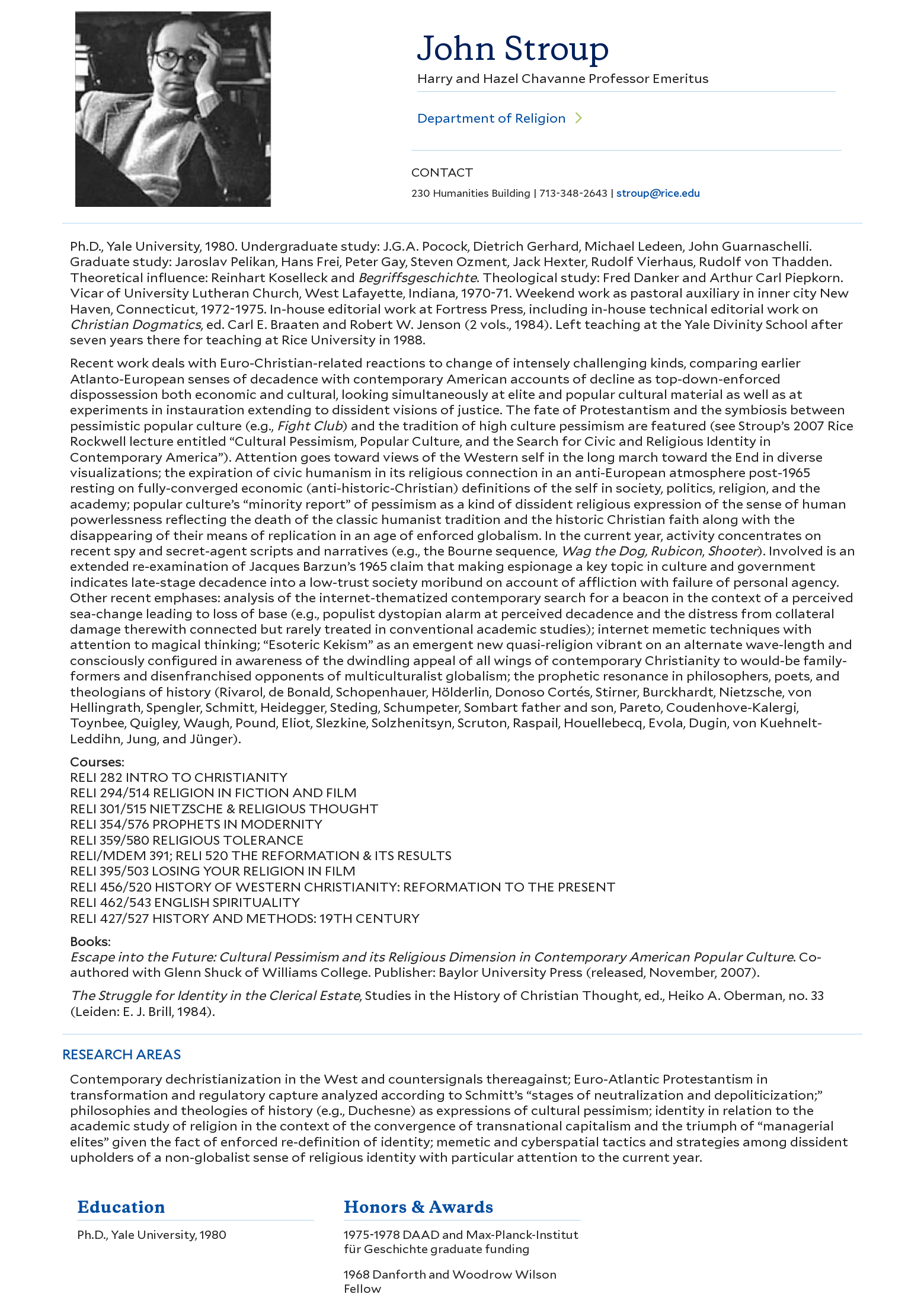
Stroup was trained as a church historian at Yale Divinity School, and other institutions abroad, under the auspices of famed scholars such as Peter Gay, Hans Frei, and Jaroslav Pelikan. In particular, Stroup would talk very fondly of the three years he spent in the late 70’s at Wolfenbüttel, conducting research at the famous Herzog August Bibliothek. In 1980 he finished his doctorate with a dissertation titled, The Struggle for Identity in the Clerical Estate: Northwest German Protestant Opposition to Absolutist Policy in the Eighteenth Century. After teaching at YDS for seven years, Stroup came to Rice and taught courses on Christianity, church history, and theory. Later in his career, he became interested in the idea of “cultural pessimism”, an idea that he explored with Glenn Shuck in their 2007 book Escape Into the Future: Cultural Pessimism and its Religious Dimension in Contemporary American Popular Culture:
Cultural pessimism is an outlook that sees various domains of contemporary life as linked, headed in a disastrous direction, and capable of improvement only in the event of a striking and complete reversal of direction. The extent of disaster here is signaled as so potentially complete that by necessity ultimate (that is to say, religious) issues and related issues of identity can never be far from sight. We take this outlook to constitute a minority-report outlook, one encoded under a requisite outer covering of upbeat attitudes or at least attitudes allowing for some cursory gesture in the direction of mitigation, and probably an outlook that by definition can never turn into a majority outlook, especially in a modernity founded on an enlightened and rational creed professing faith in progress, abundance, growth, and improvement. Escape Into the Future pg. xvi
Stroup was deeply interested in the narrative structure of decline rather than ascent, “the fall of the elites” rather than “the rise of the downtrodden”. Stroup believed that collapse was right around the corner and prayed that he wouldn’t be around to see it. His exotic philosophical beliefs, and the obvious disinterest in Christianity from his undergraduate students, led Stroup to feel like a “secret agent” operating deep undercover. Students no longer cared about a religious tradition that belonged to their grandparents, Christmas carols, and crumbling buildings. And yet, in courses like “Losing my Religion in Film” Stroup tried to show what a disappeared religious worldview meant for the modern world. In two blog posts, Stroup describes serving as a kind of undercover chaplain, helping students with their desires for a renewed spirituality. Even if Stroup’s Lutheranism was itself no straightforward affair.
Hanging out with Stroup often involved drinking negronis (or just plain Campari for Stroup), a conversation at the kitchen table, and the viewing of a film. Stroup’s taste in film was just as eclectic as his academic interests: two of his favorite movies were Repo Man and Fellini’s Amarcord. Stroup’s desk was also a blend of high and low culture. He would read bloggers with zero credentials before dipping into some obscure German academic journal. He had a reading level of fluency in many languages, ancient and modern, and particularly enjoyed reading in German and French. After moving into assisted living, Stroup and I would still speak regularly on the phone and watch movies together over video call. I was honored for Stroup to sit on my dissertation committee, and hear his thoughts and advice on my strange topic.
Never having married, Stroup didn’t have a traditional family of his own, but he did have a sprawling network of loyal friends who looked after him. Many of them were, or were previously, his students. He was a true and good friend, and we miss him terribly. He used to say that “the only person to the right of me is God” and I hope that is now true, and that his friends and family are to his left.